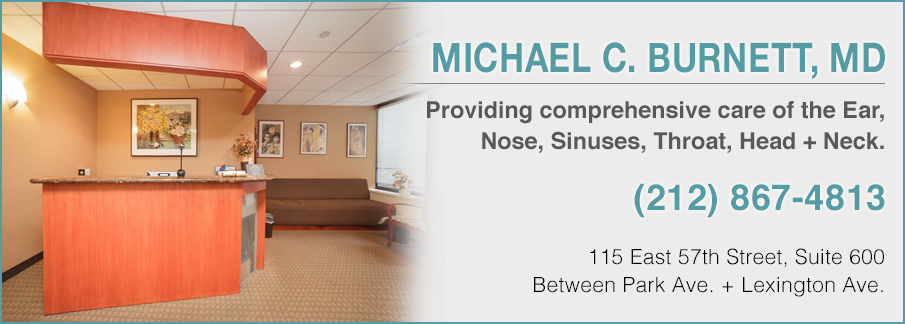
• best-ent-doctor-nyc
  • best-ear-nose-throat-doctor-nyc
  • best-ear-doctor-nyc
  • best-nose-doctor-nyc
  • best-throat-doctor-nyc

Dr. Michael Burnett Specializes in Problems of the Ear, Nose, Sinuses and Throat.

An ear, nose and throat specialist (ENT) is a physician trained in the medical and surgical treatment of the ears, nose, throat, and related structures of the head and neck. They have special expertise in managing diseases of the ears, nose and nasal passage sinuses, larynx (voice box), oral cavity and upper pharynx (mouth and throat), as well as structures of the neck and face. ENT is the oldest medical specialty in the United States.

MIDTOWN EAST / UPPER EAST SIDE LOCATION
PLEASE CALL FOR SAME DAY AND URGENT APPOINTMENTS
NOT ALL AVAILABLE APPOINTMENTS ARE LISTED ON ZOCDOC

212-867-4813


Category Archives: Voice

Voice and Throat Care for NYC Professionals and Performers

Voice and throat care for NYC professionals and performers is essential to maintaining vocal strength, clarity, and long-term health. Without proper care, constant voice use combined with environmental factors like pollution, allergens, and dry indoor air can lead to hoarseness, vocal fatigue, and more serious vocal cord disorders. New York City is a place where voices matter. From Broadway performers and singers to teachers, lawyers, broadcasters, and public speakers, many professionals rely heavily on their voices every single day. ENT specialists such as Dr. Michael Burnett at Ear, Nose & Throat of New York regularly treat voice-related conditions and help professionals protect their most valuable instrument—their voice.

Voice and Throat Care for NYC Professionals and Performers

Why Vocal Health Is So Important

For professionals who depend on speaking or singing, even minor voice changes can significantly impact work performance. The vocal cords are delicate tissues located in the larynx (voice box), and overuse, strain, illness, or environmental irritants can cause inflammation or injury.

Common voice-related problems among professionals include:

  • Chronic hoarseness
  • Vocal fatigue
  • Voice strain or pain when speaking
  • Loss of vocal range
  • Difficulty projecting the voice
  • Frequent throat clearing

When these symptoms persist, they may indicate an underlying issue such as vocal cord nodules, polyps, inflammation, or acid reflux affecting the throat.

Common Causes of Voice Problems in NYC

Living and working in a busy city like New York presents unique challenges for vocal health. Some of the most common causes of voice problems include:

  • Vocal overuse: Long speaking engagements, rehearsals, or performances without adequate rest.
  • Environmental irritants: Pollution, smoke, and allergens that inflame the throat.
  • Acid reflux (LPR): Stomach acid reaching the throat can irritate vocal cords.
  • Respiratory infections: Colds and flu can temporarily damage the voice.
  • Improper vocal technique: Singing or speaking without proper breath support.

Identifying the cause of vocal problems early is key to preventing long-term damage.

Essential Voice Care Tips for Professionals

NYC professionals and performers can protect their voices by following several simple but effective strategies.

Stay Hydrated

Hydration is one of the most important aspects of vocal health. Drinking plenty of water keeps the vocal cords lubricated and reduces strain.

  • Aim for 6–8 glasses of water daily.
  • Avoid excessive caffeine and alcohol, which can dry out the throat.

Warm Up Your Voice

Just like athletes warm up before exercise, vocal professionals should warm up their voice before heavy use.

  • Gentle humming exercises
  • Breathing exercises
  • Vocal scales for singers

Proper warm-ups reduce the risk of vocal cord strain.

Avoid Vocal Strain

Speaking loudly over background noise, shouting, or whispering for long periods can all stress the vocal cords.

  • Use microphones during performances or presentations when possible.
  • Take vocal breaks throughout the day.

Manage Acid Reflux

Acid reflux is a common but often overlooked cause of throat irritation.

  • Avoid eating heavy meals before bedtime.
  • Limit spicy, acidic, or fatty foods.
  • Seek medical treatment if symptoms persist.

Professional Treatments for Voice Disorders

If voice problems continue despite self-care measures, evaluation by an ENT specialist is important. Dr. Michael Burnett offers comprehensive voice evaluations and treatment options for professionals in New York City.

Common treatments include:

  • Laryngoscopy: A diagnostic procedure that allows the doctor to examine the vocal cords.
  • Voice therapy: Working with speech-language pathologists to improve vocal technique.
  • Medical treatment: Addressing infections, inflammation, or reflux conditions.
  • Minimally invasive surgery: Removing vocal cord nodules, cysts, or polyps when necessary.

Early diagnosis helps prevent long-term damage and allows professionals to return to full vocal performance quickly.

When to See an ENT Specialist

Professionals should schedule an evaluation if they experience:

  • Hoarseness lasting longer than two to three weeks
  • Pain or strain when speaking
  • Loss of vocal range
  • Persistent throat irritation
  • Difficulty projecting the voice

Prompt treatment can help protect vocal longevity and prevent more serious conditions.

Expert Voice Care in New York City

For NYC professionals and performers, the voice is more than just a means of communication—it is a critical career tool. Protecting and maintaining vocal health should be a priority for anyone who relies on their voice daily.

Dr. Michael Burnett and the team at Ear, Nose & Throat of New York provide specialized voice and throat care for singers, actors, public speakers, teachers, and other voice professionals throughout New York City.

Ear, Nose & Throat of New York
Michael C. Burnett, MD
115 East 57th Street Suite 600
New York, NY 10022
212-867-4813

The Role of an ENT in Treating Voice Disorders

Voice disorders can significantly impact communication and quality of life. An ENT (Ear, Nose, and Throat) specialist, also known as an otolaryngologist, plays a crucial role in diagnosing and treating these conditions. Here’s how an ENT can help manage voice disorders effectively.

The Role of an ENT in Treating Voice Disorders

Understanding Voice Disorders

Voice disorders occur when the vocal cords (vocal folds) do not function properly, affecting the sound produced by the voice. Common symptoms include hoarseness, vocal fatigue, reduced vocal range, and pain when speaking or singing.

Common Causes of Voice Disorders

Vocal Cord Nodules and Polyps

Repetitive strain on the vocal cords, such as excessive talking, shouting, or singing, can lead to the formation of nodules and polyps. These benign growths can cause hoarseness and other vocal problems.

Laryngitis

Inflammation of the vocal cords, often caused by infections, allergies, or overuse, can lead to laryngitis. This condition typically results in a hoarse or raspy voice.

Vocal Cord Paralysis

Vocal cord paralysis occurs when one or both vocal cords do not move properly, often due to nerve damage. This can lead to breathy voice, hoarseness, and difficulty speaking loudly.

Muscle Tension Dysphonia

Muscle tension dysphonia is caused by excessive muscle strain around the larynx (voice box), leading to a strained or tight voice.

Reflux Laryngitis

Acid reflux can irritate the vocal cords, causing inflammation and leading to a condition known as reflux laryngitis. This often results in a hoarse voice and chronic throat clearing.

Diagnosis of Voice Disorders

An ENT specialist employs various techniques to diagnose voice disorders accurately:

Medical History and Physical Examination

The initial evaluation includes a thorough review of the patient’s medical history and a physical examination to identify any contributing factors.

Videostroboscopy

Videostroboscopy is a specialized technique that uses a strobe light and a camera to visualize the vocal cords in slow motion. This allows the ENT to observe vocal cord vibrations and identify abnormalities.

Laryngoscopy

Laryngoscopy involves inserting a thin, flexible tube with a camera (laryngoscope) through the nose or mouth to examine the vocal cords and larynx.

Acoustic Analysis

Acoustic analysis measures various aspects of the voice, such as pitch, volume, and quality, to assess vocal function and detect issues.

Treatment Options for Voice Disorders

The treatment plan for voice disorders depends on the underlying cause and severity of the condition. Here are some common approaches:

Voice Therapy

Voice therapy, conducted by a speech-language pathologist, focuses on improving vocal habits and techniques. This therapy helps patients use their voice more efficiently and reduces strain on the vocal cords.

Medications

Medications may be prescribed to treat underlying conditions contributing to voice disorders. For example, anti-inflammatory drugs can reduce vocal cord inflammation, and acid reflux medications can manage reflux laryngitis.

Surgical Interventions

In some cases, surgery may be necessary to remove vocal cord nodules, polyps, or other growths. Procedures such as microlaryngoscopy allow precise removal of these lesions, improving vocal quality.

Botulinum Toxin Injections

For conditions like spasmodic dysphonia, botulinum toxin (Botox) injections can reduce muscle spasms and improve voice quality.

Lifestyle Modifications

Patients are often advised to make lifestyle changes to support vocal health, such as staying hydrated, avoiding smoking, reducing alcohol consumption, and managing stress.

Preventive Measures for Voice Health

Hydration

Staying well-hydrated is essential for maintaining vocal cord health. Drinking plenty of water keeps the vocal cords lubricated and reduces the risk of irritation.

Vocal Warm-Ups

Performing vocal warm-up exercises before speaking or singing can help prepare the vocal cords and prevent strain.

Avoiding Vocal Strain

It’s important to avoid shouting, screaming, or talking excessively without breaks. Using a microphone when speaking in large spaces can also help reduce vocal strain.

Conclusion

ENT specialists play a vital role in diagnosing and treating voice disorders. Through a combination of advanced diagnostic techniques and tailored treatment plans, they help patients regain their vocal health and improve their quality of life.

For expert diagnosis and treatment of voice disorders, contact Dr. Michael Burnett at Ear, Nose & Throat of New York. Our dedicated team is here to provide comprehensive care.

Contact Information

Ear, Nose & Throat of New York
Michael Burnett, MD
115 East 57th Street Suite 600
New York, NY 10022
212-867-4813

Convenient East Side / Upper East Side NYC Location

Voice Matters: NYC ENT Services for Singers and Public Speakers

Are there ENT services for singers and public speakers? In the city that never sleeps, the power of your voice can be your greatest asset. Whether you’re a professional singer, actor, public speaker, or simply someone who relies on their voice for daily communication, maintaining vocal health is crucial. New York City offers a thriving arts and business scene, but it also poses unique challenges to your vocal cords. That’s where the expertise of an Ear, Nose & Throat (ENT) specialist comes in.

NYC ENT Services for Singers and Public Speakers

ENT Services for Singers and Public Speakers: The Importance of Vocal Health

Your voice is an integral part of your identity and livelihood. Singers, actors, and public speakers rely on their voices to convey emotion, connect with audiences, and deliver compelling performances. Here’s why vocal health matters:

Vocal Performance

For performers, a well-preserved voice is essential for delivering exceptional and consistent performances.

Communication

Effective communication is crucial in both personal and professional settings. A healthy voice ensures clear and impactful communication.

Career Success

For professionals in fields such as sales, teaching, and leadership, a strong and expressive voice can enhance career opportunities and success.

Challenges to Vocal Health in NYC

New York City’s unique environment can present challenges to vocal health:

Environmental Factors

Exposure to pollutants, allergens, and irritants in the city’s air can affect your vocal cords.

Vocal Strain

Public speakers and performers often experience vocal strain due to long hours of use and the demands of their professions.

Allergies

Seasonal allergies are common in NYC and can lead to voice problems.

Infections

Crowded spaces and close interactions can increase the risk of respiratory infections that impact vocal health.

NYC ENT Services for Vocal Health

ENT specialists in NYC, such as Dr. Michael Burnett, offer a range of services to address vocal health and performance concerns:

Vocal Assessments

Comprehensive evaluations of vocal cord health, including laryngoscopy, can identify issues and guide treatment.

Voice Therapy

Speech-language pathologists provide voice therapy to improve vocal technique and address voice disorders.

Allergy Management

Identifying and managing allergies is crucial for maintaining vocal health.

Surgical Interventions

In some cases, surgical procedures can correct vocal cord problems and enhance vocal performance.

Consult with an NYC ENT Specialist

If you rely on your voice for your profession or are concerned about vocal health, it’s essential to consult with an ENT specialist in NYC. Dr. Michael Burnett is dedicated to helping singers, actors, public speakers, and individuals from all walks of life achieve and maintain optimal vocal health.

ENT Services for Singers and Public Speakers: Contact Ear, Nose & Throat of New York

Don’t let vocal challenges hold you back in the city that thrives on communication and expression. Contact us today to schedule a consultation with Dr. Michael Burnett and explore the comprehensive ENT services we offer to support your vocal health and performance.

Ear, Nose & Throat of New York
Michael Burnett, MD
Phone: 212-867-4813

Your voice matters, and we’re here to help you make it heard in the heart of NYC.

Michael C. Burnett, MD

115 East 57th Street
(Between Park + Lexington Ave.)
Suite 600
New York, NY 10022

212-867-4813